The supplied material names no robot, school, research paper, price, or test result. That leaves zero verified products to rank, so the useful question is which proof would show that an educational robot has moved beyond a classroom demo.
- No model is named: there is no product to compare.
- No test date or result is supplied: claims about learning, safety, or reliability remain unproven.
- No price is listed: schools can't judge the cost of adoption.
Start with the task
An educational robot earns attention when it helps students do a defined piece of work. That work might involve writing code, measuring movement, fixing a sensor fault, or studying how a robot makes a decision.
A general promise about “engagement” gives a school little to plan around. The first detail to seek is the lesson plan, which should say what students build, what the robot does, and how a teacher checks the result.
A robot that moves through a short scripted demo may suit an introduction to programming. It gives weaker proof for a full term of lessons.
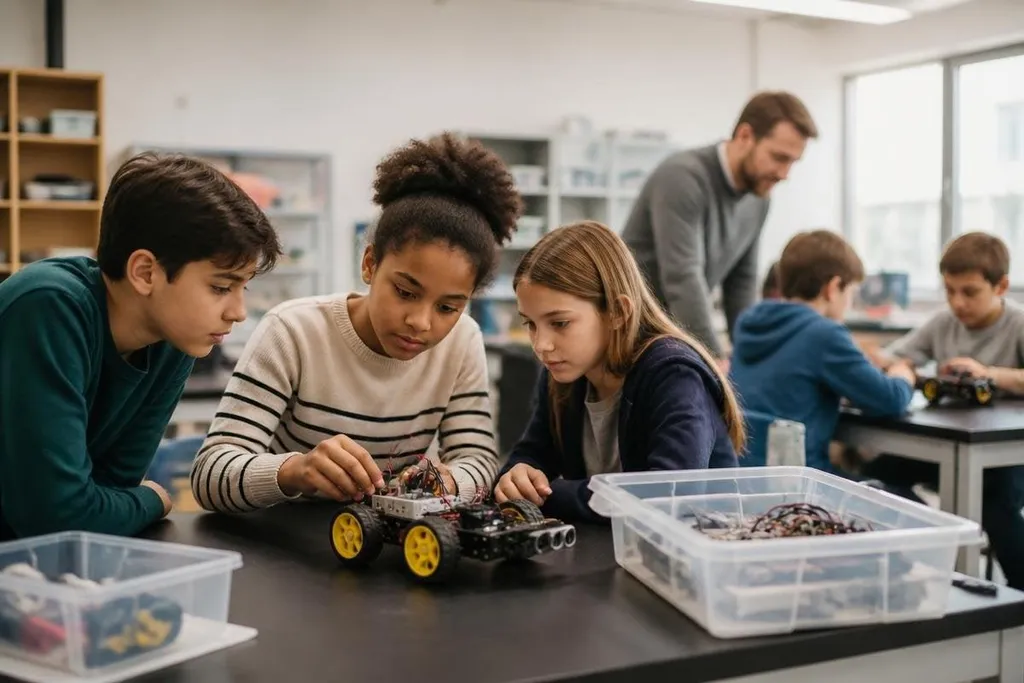
The age range matters too. A small wheeled robot for primary pupils needs different controls and safety limits from a research platform used by university students. Any claim about educational value needs the learner group, lesson length, class size, and teacher role beside it.
Look for repeatable classroom work
A robot should run the same task many times without a technician resetting it after each attempt. That requires details about setup, battery charging, software, spare parts, and fault recovery. Those details affect a teacher's timetable more than a polished video does.
Software matters as much as the hardware. Students need a clear path from a first command to a harder project. If the robot uses a software development kit, the source should name the supported languages, operating system, and access rules. Without those details, a school can't plan lessons or train staff.
When a student sends a bad command, the robot's response matters as much as the lesson plan. A report on Robot24.com should name the robot, test site, task, and failure response, so a teacher can judge what the machine does under stress. Those details lead straight to safety: speed, stopping distance, force, and restart time all need numbers.
Safety needs numbers
School deployment brings physical and digital risks. A source should state the robot's weight, moving speed, battery type, emergency stop method, and operating area. It should also explain how the robot behaves after a lost connection or blocked path.
Data handling needs the same care. A camera or microphone can collect information about children, teachers, or rooms. The maker should identify what the robot records, where it stores that data, how long it keeps it, and who can access it.
A safety label without test details tells you little. Look for the named standard, inspection method, or school policy used in the trial. If those details are missing, treat the safety claim as incomplete.
Cost decides adoption
Schools buy more than the robot. They may need charging equipment, software access, storage, training, spare parts, and support. A price for one unit cannot answer the budget question unless the source also states the number of students served and the lesson setup.
The missing figures matter here. The supplied material gives no purchase price, subscription fee, warranty period, or support cost. Those four numbers should be among the first facts checked before a school places an order.
I'd wait for a named classroom trial with measured results before calling any educational robot a real advance. A short demo can show that a machine works once; a school needs proof that students and teachers can use it week after week.
A practical check before buying
Use this list when a product reaches your procurement meeting:
- Name the lesson: write down the student task and the expected result.
- Check the trial: ask for the school, age group, class size, and test period.
- Count the minutes: include setup, charging, repairs, and teacher training.
- Read the safety plan: record speed, weight, stop controls, and data rules.
- Price the whole system: include software, spare parts, support, and warranty.
The next verified article on this topic needs a robot model, a dated classroom test, measured student work, and a full cost. Until those four pieces appear, the evidence itself is the main result to watch.